
Searching Haskell County Criminal Dockets
No county-hosted docket search form exists for Haskell County criminal cases. So start with what you already hold. Pull the cause number and court name from the ticket, charging papers, or an earlier notice. The County Clerk's posted search memo does not promise broad criminal searches by name. Felony matters in district court generally sit with Cynthia Jones, the Haskell District Clerk. Fine-only cases may fall to the Justice Court or a city municipal court.
One more route is the statewide re:SearchTX portal. You must register or sign in. Coverage shifts with each court, record type, and access rule. A solid Haskell County criminal docket search moves through these steps:
- Write down the cause number, court, county, and filing or citation date.
- Search re:SearchTX under Cases, Filings, Text in Documents, or Hearings.
- Confirm that the result names Haskell County and the right court.
- Read settings, filings, status, and any restriction note.
- Call the maintaining clerk for a missing record or certified copy.
Haskell Criminal Cause Numbers First
Haskell County's search policy puts unusual weight on the cause number. That number pins down one court file. Guessing from a shared last name risks pulling the wrong person's case entirely. Without the number, collect the court name, a rough filing date, the case category, and the narrowest lawful description of what you need. Then ask the right clerk what else is required.
Say plainly what you want. Options are to inspect the file, get a plain copy, or get a certified copy. Those are three different requests. For county-level matters, call the County Clerk at 940-864-2451. District felony records go to the District Clerk at 940-864-2030. You can also try the 39th Judicial District Court at 940-864-2661. Call when the state index returns nothing.
Inside a Haskell County Criminal Docket
Think of a criminal docket as an event log, not a full criminal-history report. It names the case. It also shows the public steps the court recorded. Labels differ from court to court. A blank document link does not prove no filing exists. Use this field list when you compare a portal result against clerk information.
| Cause number | The court's identifier, shown as a format such as court-specific cause number; no single Haskell criminal format was verified. |
|---|---|
| Court and county | The tribunal holding the file and the county tied to the result. |
| Charge category | The public offense or case category, subject to access limits. |
| Filings | Public document titles and filed dates, if indexed. |
| Hearings | Setting date, type, judge, place, and status when available. |
| Disposition | The recorded outcome or current status, not an interpretation of guilt. |
| Restriction | A sealed, confidential, expunged, or otherwise limited access marker. |
Always write down the date you checked. A new filing or a reset can reach the clerk's file before it shows up in an online result.
Haskell Felonies and Fine-Only Cases
The court name decides the route. Felony and other district-level criminal matters in Haskell County go to the 39th Judicial District Court, which also serves Kent, Stonewall, and Throckmorton counties. A result naming only the 39th District still needs a county check. The District Clerk keeps the Haskell district filings.
Fine-only matters and citations travel a different road. Citation cases go to the Haskell County Justice of the Peace, Precinct 1, Place 1, while city traffic and ordinance cases may sit in municipal court. The state directory lists municipal courts for Haskell, Rochester, and Weinert. Rule and O'Brien have no separate listing. That does not mean no local administrative route exists. Follow the court printed on the citation.
How a Criminal Case Moves
District cases and fine-only cases follow different steps. Even so, a docket records a sequence, not one frozen result. A district felony docket may show the initial filing, arraignment, motions, pretrial settings, plea or trial activity, disposition, and sentencing. A fine-only case often starts with a citation and appearance setting, then a plea, hearing, available disposition, or judgment.
Docket flow: Filing › Arraignment or Appearance › Pretrial Settings › Plea or Trial › Disposition › Sentencing or Judgment
A reset only means the setting moved. It does not dismiss the case. An online status label may likewise skip orders sitting in the file. Read the events in date order, then ask the clerk where to get an official copy.
Haskell Criminal Activity in Context
Court statistics offer scale without naming anyone. Covering September 1, 2023 through August 31, 2024, the Office of Court Administration counted 75 active district criminal cases at the start of the year, 73 added, 92 disposed, and 57 pending at the end in Haskell County. The justice-court level reported 609 criminal cases added and 657 disposed.
These are aggregate reporting categories, nothing more. They are not a live Haskell County criminal docket, and they cannot say whether any single case has a future hearing. The OCA annual reports supply the source context. Confirm each setting with the court.
Courts That Hold Criminal Dockets
Let the file's court level pick the holder. The Haskell District Clerk keeps district felony filings. The County Clerk carries county-level duties, but its search memo is not a broad name-based criminal search service. Justice Court records stay with the JP clerk, and city ticket records stay with the municipal court that issued or heard them.
re:SearchTX also indexes state cases for the public. eFileTexas plays a different role: it is the filing channel for parties and lawyers, not a place to search a public docket. A Haskell County criminal docket that will not appear online may still exist locally, may not be indexed yet, or may be restricted. Contact the keeper of the record before concluding anything.
Haskell Criminal Documents That Vanish
A Haskell County docket line and the paper behind it are two different things. The index may list an event. The clerk may withhold the attached document. Several things get special treatment: juvenile material, protected identifiers, sealed filings, and expunged records. A portal can also lag behind the clerk. It may simply lack a filing the office has on hand.
When a document will not open, write down the cause number, the document title, the filed date, the court, and any restriction message. Then ask the maintaining clerk two things. Is the item public, and can you request a copy? Guessing at contents from another filing is a bad move. The official answer may be that the record is confidential or sealed. It may also be off limits without a court order.
Sealed Dockets and Public Access
Texas gives the public more than one legal route to records. The route depends on what you want. Case files run through the court and the clerk. Judicial records, as that term is defined, fall under Texas Rule of Judicial Administration 12. The Texas Public Information Act does not convert every case file into a routine agency request. So the type of record and the office holding it both matter for any Haskell County docket search.
For expunctions, the Code of Criminal Procedure Chapter 55A limits release, maintenance, and dissemination of anything covered by a final expunction order. The official statutory page spells out those limits.
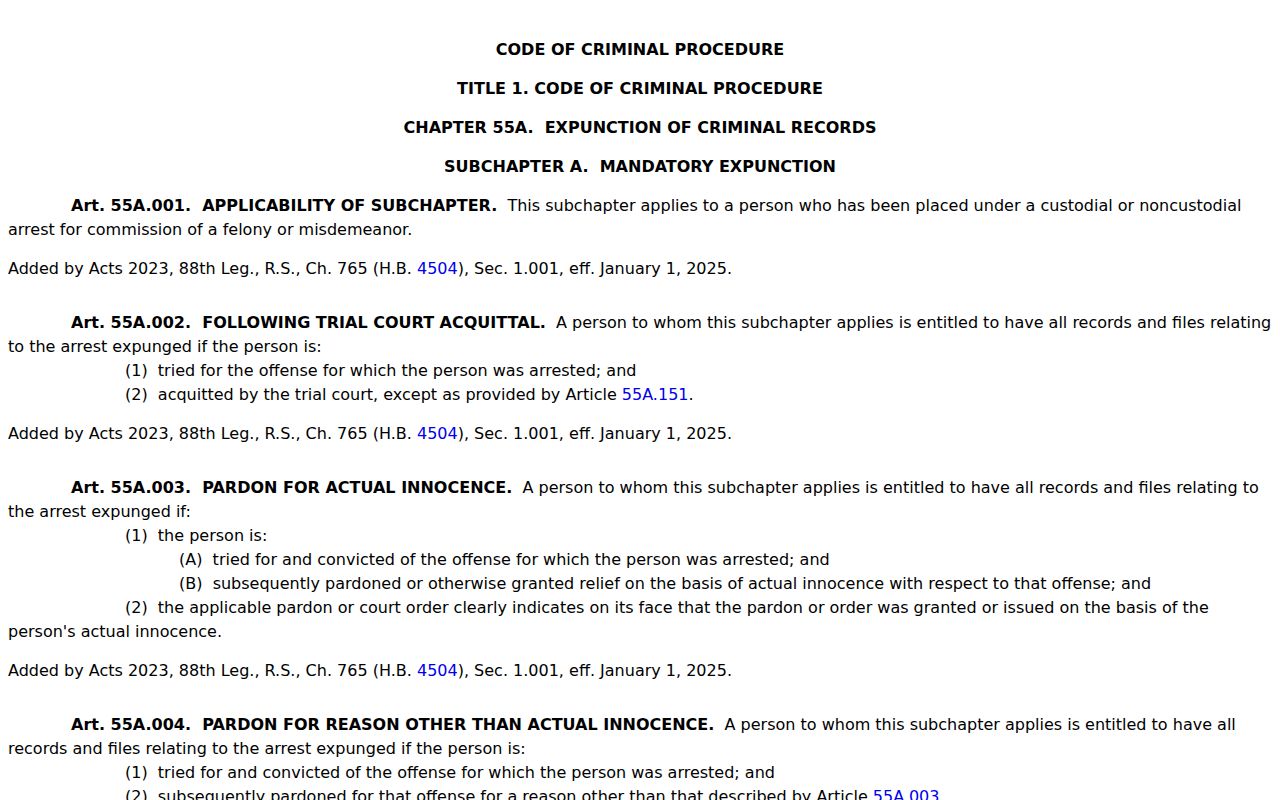
The statute explains why a docket entry cannot be copied or republished just because it once showed up in a search. Any Haskell County criminal docket request has to respect the record's current legal status.
Key access rules: A public docket index does not make every attachment public.
Chapter 55A controls covered expunged criminal records. Juvenile records and protected identifiers have separate limits.
Verify access with the court or clerk that maintains the original file.
Haskell's Four-County Criminal Court
The 39th Judicial District covers Haskell, Kent, Stonewall, and Throckmorton Counties. That shared identity can trip up a docket search fast. A hit from the 39th Court proves little on its own. Confirm the county field first. Then check the district clerk and the cause number. Do this before requesting a file or acting on a setting.
A Haskell filing belongs with the Haskell District Clerk and the local court contacts. The court number names the tribunal. The county tells you which local file and clerk you need. The distinction pays off most in re:SearchTX results. It also matters in orders that list all four counties in the district.